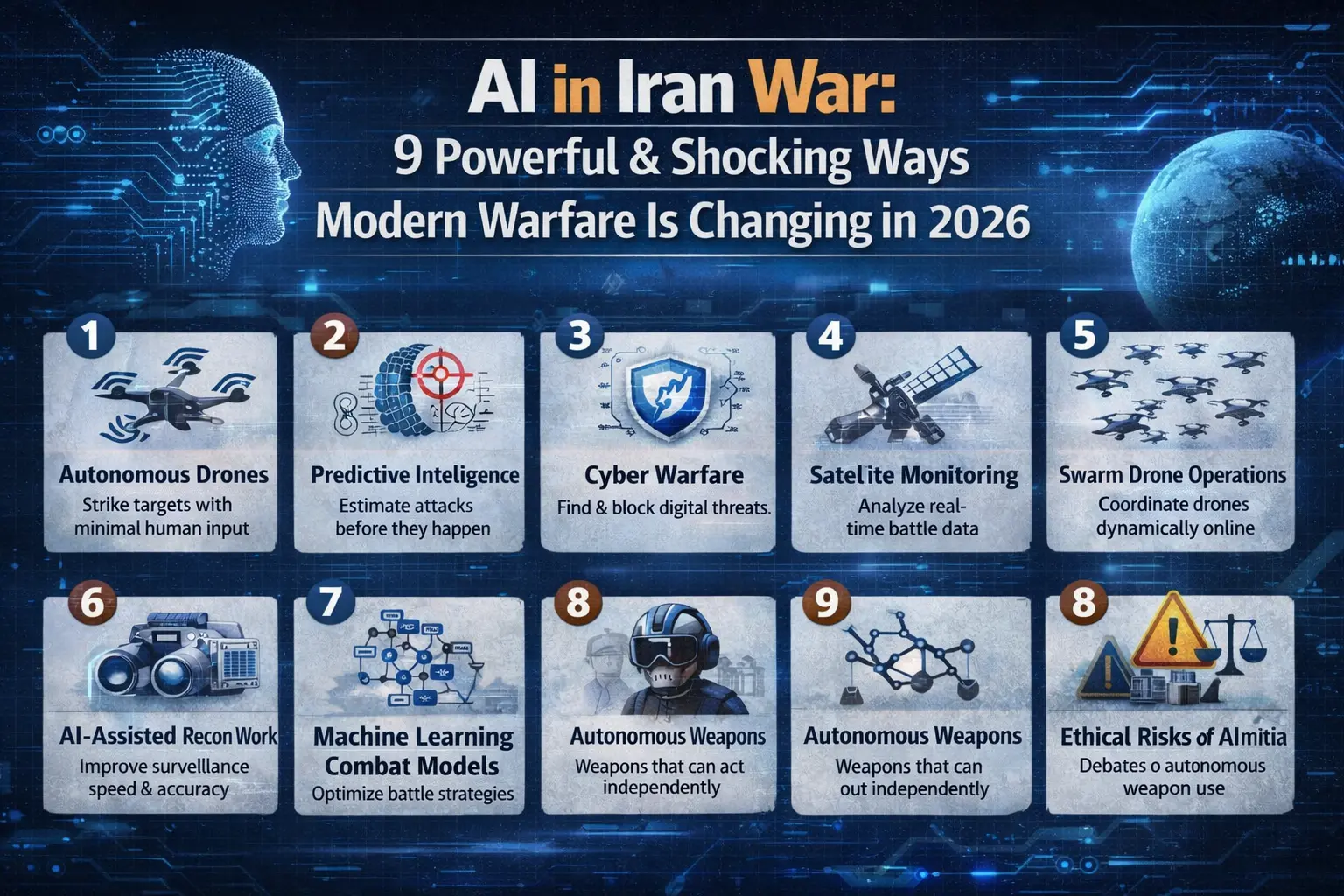
AI in Iran War is no longer theory — it is actively shaping how modern conflicts are fought. From autonomous drone systems to real-time battlefield intelligence, artificial intelligence is transforming strategy, speed, and decision-making.
The AI in Iran War scenario represents a major shift in military operations where data, automation, and predictive systems play a critical role.
In this pillar guide, we break down how AI in Iran War works, how it is being used, and what the future of AI warfare looks like.
📌 Table of Contents
- What Is AI in Iran War?
- How the United States Uses AI in Iran War
- Iran’s AI Military Capabilities
- AI-Powered Drone Warfare
- AI in Cyber Warfare
- Predictive Battlefield Intelligence
- AI Surveillance and Satellite Monitoring
- Ethical Risks of AI in Iran War
- Future of AI in Modern Warfare
1️⃣ What Is AI in Iran War?
AI in Modern War refers to the use of artificial intelligence systems in military operations involving Iran-related conflicts.
This includes:
- Autonomous drone targeting
- Machine learning intelligence systems
- Cyber defense automation
- Satellite image analysis
- Predictive combat modeling
AI in War is about speed, accuracy, and automation.
2️⃣ How the United States Uses AI in Iran War
The United States integrates AI systems into:
- Drone navigation
- Threat detection
- Missile defense coordination
- Battlefield analytics
AI in War enables faster decision-making by analyzing massive volumes of data in seconds.
The U.S. Department of Defense publicly discusses AI development initiatives here:
👉 https://www.defense.gov (DoFollow External Link)
3️⃣ Iran’s AI Military Capabilities
Iran has invested in:
- AI-assisted drone programs
- Autonomous surveillance systems
- Electronic warfare tools
- Cyber intelligence automation
AI in Modern War includes both physical battlefield systems and digital warfare strategies.
4️⃣ AI-Powered Drone Warfare
One of the most visible aspects of AI in Modern War is drone technology.
Modern AI drones can:
✔ Identify targets using computer vision
✔ Adjust flight paths automatically
✔ Coordinate in swarm formations
✔ Operate with reduced human input
Drone swarms are considered one of the future threats in AI in War scenarios.
5️⃣ AI in Cyber Warfare
AI in Modern War extends beyond physical combat.
Cyber warfare includes:
- AI detecting cyber attacks
- Automated malware defense
- Real-time network monitoring
- Infrastructure protection
Modern conflicts often begin digitally before physical escalation.
6️⃣ Predictive Battlefield Intelligence
AI systems analyze:
- Satellite data
- Communication signals
- Movement patterns
- Logistics tracking
AI in Iran War allows predictive modeling — estimating where attacks may occur before they happen.
This dramatically changes military strategy.
7️⃣ AI Surveillance and Satellite Monitoring
Advanced AI processes:
- High-resolution satellite imagery
- Heat signatures
- Vehicle tracking
- Infrastructure mapping
This enables:
✔ Faster reconnaissance
✔ Reduced human error
✔ Better operational planning
AI in Iran War relies heavily on surveillance superiority.
8️⃣ Ethical Risks of AI in Modern War
Despite advantages, AI in Iran War raises serious concerns:
⚠ Autonomous lethal weapons
⚠ Reduced human oversight
⚠ Escalation risks
⚠ AI arms race
International discussions continue about regulating autonomous weapons systems.
For global policy discussions:
👉 https://www.un.org/disarmament (DoFollow External Link)
9️⃣ Future of AI in Modern Warfare
The future of AI in Iran War and global conflict may include:
- Fully autonomous combat drones
- AI-assisted missile defense shields
- Real-time battlefield simulation systems
- AI-driven military logistics
- Human-AI hybrid command systems
AI in Iran War is only the beginning of a broader transformation in global defense technology.